Why Mental Health Must Be a Priority for Today’s Young Professionals
Mental health is no longer a peripheral topic, it has become central to how students and early-career professionals navigate modern life. In an environment shaped by constant deadlines, rising competition, and the pervasive influence of social media, the pressure to perform is both immediate and relentless. As a result, maintaining mental well-being is no longer optional; it is essential.
For many young individuals, the transition from education to the professional world brings with it an unspoken expectation to “figure everything out” quickly. Academic performance, internships, networking, skill development, and personal life all demand attention at once. Layered on top of this is the curated reality of social media, where peers appear to be continuously achieving milestones. The comparison can be subtle, but its impact is significant, often contributing to stress, anxiety, and burnout.
Yet, despite these pressures, there is a simple truth that is often overlooked: very few people have everything figured out. Acknowledging this can be a powerful first step toward reducing unnecessary self-imposed stress.
Mental health encompasses how individuals think, feel, and respond to challenges. It directly influences focus, productivity, decision-making, and relationships. When neglected, even manageable difficulties can escalate, affecting both personal and professional growth. Recognizing signs of mental strain is not a sign of weakness, rather it reflects self-awareness and emotional intelligence.
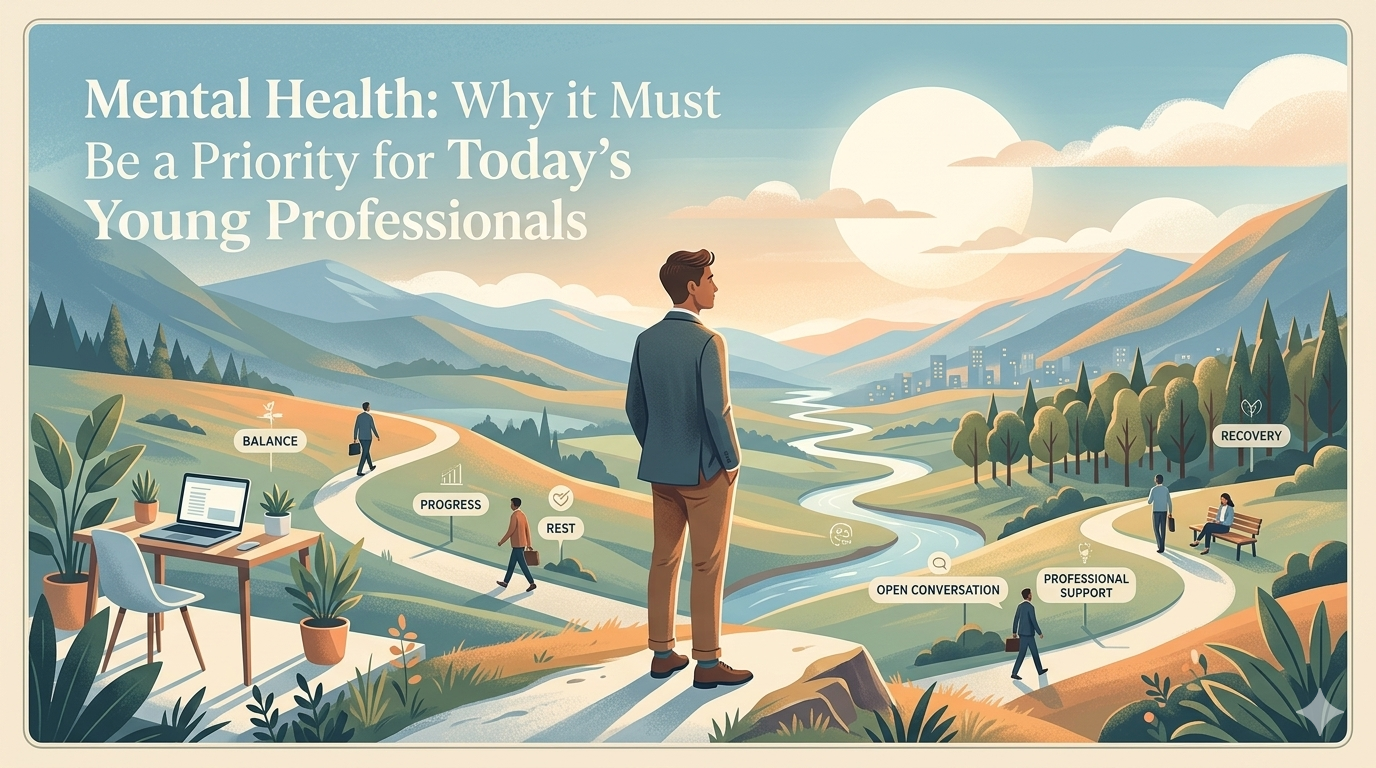
One of the defining challenges of this generation is balancing ambition with well-being. The rise of hustle culture has normalized constant busyness, often equating it with success. However, sustained productivity requires periods of rest and recovery. “Breaks” whether short pauses during the day or intentional time away from work play a critical role in maintaining cognitive performance and creativity.
Equally important is the issue of self-comparison. In highly competitive academic and professional settings, it is easy to measure one’s progress against that of others. However, such comparisons can be misleading and counterproductive. Each individual’s journey is shaped by different circumstances, opportunities, and timelines. Sustainable growth is better achieved through consistent personal progress rather than external benchmarks.
Open conversations about mental health are also essential. Despite growing awareness, stigma still prevents many individuals from seeking support. Encouraging dialogue whether with peers, mentors, or professionals can help reduce isolation and foster a more supportive environment. Sharing challenges does not diminish capability; it strengthens resilience.
In addition, everyday habits play a foundational role in mental well-being. Adequate sleep, balanced nutrition, and regular physical activity significantly influence mood, energy levels, and overall functioning. Setting realistic goals and managing time effectively can further reduce unnecessary stress. The ability to establish boundaries and decline excessive commitments is an equally important, though often overlooked, skill.
Professional support should also be viewed as a proactive resource rather than a last resort. Counseling and therapy provide individuals with tools to better understand themselves, manage stress, and navigate complex emotions. Seeking such support reflects responsibility and a commitment to long-term well-being.
Ultimately, it is important to approach oneself with patience and compassion. The early stages of academic and professional life are inherently uncertain, marked by exploration, setbacks, and growth. Mistakes and moments of doubt are not indicators of failure, but integral parts of the learning process.
Success, therefore, must be redefined. It is not solely determined by achievements or titles, but also by one’s ability to maintain balance, sustain well-being, and adapt to life’s challenges. Investing in mental health today lays the groundwork for a more resilient and fulfilling future.
Note: This article is published for educational and academic purposes and is not intended as medical advice. For any health concerns, please consult a qualified expert or professional.