
GARIMA BORA
PhD Research Scholar
Assam down town University
Garima Bora is a Botanist, PhD Research Scholar at Assam down town University, and Senior Quality Control Officer cum Botanist at Emami Limited. She holds an MSc in Botany from Gauhati University and specializes in pharmacognosy, ethnobotany, phytochemical analysis, and biodiversity conservation. Her research focuses on traditional medicinal knowledge, indigenous plant practices, and ecological sustainability among tribal communities of Dimoria, Assam. She is a recipient of the Best Emerging Researcher Award (2025), Young Scientist Award (2026), and Young Women Scientist Award (2026). She is also a Women in Environmental Science Training (WEST) Fellow 2026 under the British Ecological Society and a Chief Minister's Climate Resilient Village Fellow. Her work bridges scientific research, indigenous knowledge, environmental conservation, and community-driven climate resilience.
Research is often understood as the systematic collection and analysis of information. However, when research moves beyond classrooms and academic institutions into actual communities, it becomes much more than a methodological exercise. It becomes an opportunity to understand people’s lives, recognise their challenges, explore their traditional knowledge and document realities that often remain unnoticed in official records. My experience of conducting household surveys in Dimoria Block, Kamrup, Assam, since 2024 has offered valuable insights into the importance of grassroots research and the need to make it more participatory and community-oriented.
Household surveys are among the most widely used methods of primary data collection in social science, environmental and development research. They provide first-hand information about household composition, educational status, occupation, and livelihood, income, housing conditions, drinking water, sanitation and awareness of government welfare programmes. However, the significance of household surveys extends far beyond these conventional indicators. They also provide an opportunity to explore the cultural, social and environmental dimensions of community life.
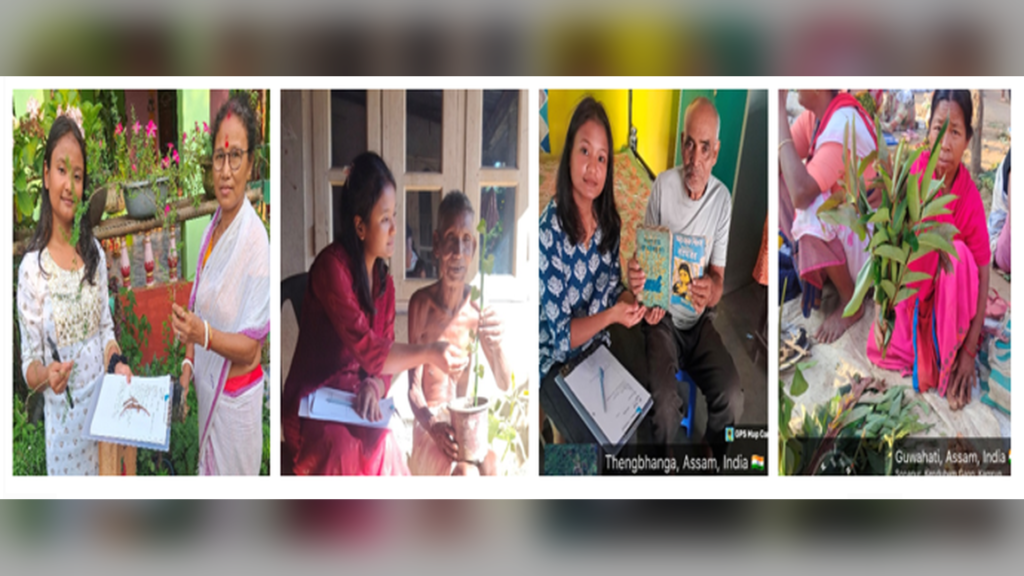
During field interactions, researchers can learn about traditional healing practices, the use of medicinal plants, locally available natural resources, indigenous food habits and the relationship between people, plants and animals. Traditional methods of healthcare, agricultural practices, the use of forest resources and customary techniques of resource management represent valuable forms of knowledge developed through generations of interaction with nature. Such knowledge, commonly understood as Traditional Ecological Knowledge (TEK), is an important part of community identity and environmental understanding. Unfortunately, much of this knowledge remains undocumented and is gradually disappearing as lifestyles, occupations and relationships with natural resources change. Household surveys, when appropriately designed, can therefore serve as an important tool for documenting and understanding these valuable traditions.
One of the most rewarding aspects of my field experience has been the opportunity to interact with people from different backgrounds and understand their everyday lives. The warmth and hospitality extended by local residents have made these experiences particularly memorable. Many people welcomed the researchers with genuine enthusiasm, offering tea, snacks and even meals. Some residents generously shared home-grown vegetables and fruits. These gestures, although simple, reflected the generosity and community spirit of the people. They also reminded me that field research is not merely about collecting information from respondents; it is about building relationships based on mutual respect, trust and human connection.
At the same time, conducting household surveys has its own challenges. One recurring difficulty was the misunderstanding of the purpose of the survey. Some residents assumed that the research was connected with government benefit distribution and expected assistance in the form of houses, toilets and other welfare facilities. Explaining that the survey was intended for academic and research purposes rather than the distribution of government benefits sometimes required considerable patience. This experience highlighted the importance of communicating research objectives clearly before beginning fieldwork. Establishing trust is essential, particularly when researchers are unfamiliar with the local community.
Household surveys offer several advantages. They generate primary information, help identify gaps in basic facilities and provide an opportunity to understand local socio-economic conditions directly. They also help researchers identify differences between households and examine how development programmes are experienced at the grassroots level. However, surveys can be time-consuming, and the quality of information may be affected by incomplete responses, hesitation in sharing personal details, language barriers and the unavailability of respondents. Another limitation is that structured questionnaires may not always capture the deeper social, cultural and environmental realities of a community. Numbers can indicate the extent of a problem, but understanding its underlying causes often requires observation, informal conversations and participatory methods.
This raises an important question: can research become more meaningful if communities are treated not merely as respondents but as active participants in the research process? In my opinion, grassroots research should gradually move beyond conventional household data collection towards a more participatory approach. Before conducting direct household interviews, researchers could organise Focus Group Discussions (FGDs) involving different sections of the community. These discussions provide an opportunity for residents to identify their major concerns, discuss local priorities and express their expectations. They can also help researchers understand people’s awareness of environmental protection, sanitation, waste management, traditional healthcare practices and government programmes. Participatory Rural Appraisal (PRA) techniques, including community mapping, group discussions and resource mapping, can further help identify local resources, challenges and priorities through the knowledge of residents themselves.
Proper preparation and institutional coordination are equally important for successful fieldwork. Researchers should obtain the necessary written permissions and signed authorisations from relevant authorities, such as the Circle Office, Deputy Commissioner’s Office, village head or Gaon Burah, and concerned institutional authorities, wherever applicable. Such coordination helps establish the credibility of the research team and facilitates communication with local communities. Preliminary meetings with community representatives can also help explain the objectives of the study and minimise misunderstandings.
Another important aspect of community-based research is the integration of educational and awareness activities into fieldwork. Research should not remain limited to asking questions and recording answers. It should also create opportunities for collective learning and community engagement. For instance, researchers working on environmental issues could organise drawing competitions on World Environment Day, demonstrations on vermicomposting, discussions on scientific waste disposal and awareness programmes on biodiversity conservation. Such activities can help assess existing environmental awareness while encouraging people, particularly children and young people, to participate in sustainable practices. Similarly, discussions about medicinal plants, traditional healing practices and locally available natural resources can encourage older generations to share their knowledge with younger members of the community. This would not only enrich research but also contribute to the documentation and preservation of valuable local knowledge.
For young researchers and field investigators, the most important lesson is to approach communities with preparation, patience and sensitivity. Questionnaires should be carefully designed using simple, unbiased and relevant questions and preferably tested through a pilot survey before actual fieldwork. Researchers should explain the purpose of the study, obtain informed consent, respect privacy and maintain confidentiality. They must avoid influencing respondents’ answers or making promises about benefits that the research cannot provide. When documenting traditional healing practices or indigenous knowledge, researchers should also seek permission, respect cultural sensitivities and acknowledge the knowledge holders. Most importantly, local people should be recognised as contributors of knowledge rather than merely sources of information.
My experiences in Dimoria Block have reinforced my understanding that grassroots research has a much wider purpose than fulfilling academic requirements. It can help identify development gaps, document traditional knowledge, recognise environmental challenges and bring local concerns into wider discussions on sustainable development. The combination of household surveys, participatory discussions, field observations and community awareness initiatives can provide a more comprehensive understanding of local realities.
Ultimately, the success of research should not be measured only by the number of questionnaires completed or households covered. Its real value lies in the quality of information gathered, the trust established with communities and the extent to which people’s experiences and knowledge are represented accurately. In an era of rapid social and environmental change, documenting local traditions, traditional ecological knowledge and community experiences is as important as understanding conventional socio-economic indicators. Communities should not simply be studied; they should be heard, respected and involved in the process of understanding their own development. After all, behind every statistic is a human experience, behind every traditional practice is generations of knowledge, and behind every community is a story that deserves to be heard, understood and preserved.