How to Choose the Right Conference to Present Your Work
Presenting your research at an academic conference is one of the most rewarding milestones of student and faculty life. It offers an invaluable opportunity to share your findings, test new hypotheses, get real-time feedback from leading scholars, and build a professional network that can shape your career. However, with thousands of national and international conferences, symposia, and webinars taking place every year, picking the right platform can feel overwhelming.
Choosing poorly can result in wasted registration fees, sparse audience engagement, or worse—submitting your hard work to a predatory event with zero academic value. To ensure your time and research budget are well-spent, let us walk through a practical, step-by-step approach to evaluating and selecting the ideal conference for your next presentation.
1. Define Your Core Goal: Why Are You Attending?
Before typing search terms into event directories, ask yourself what you want to achieve out of the experience. Different conferences serve entirely different purposes:
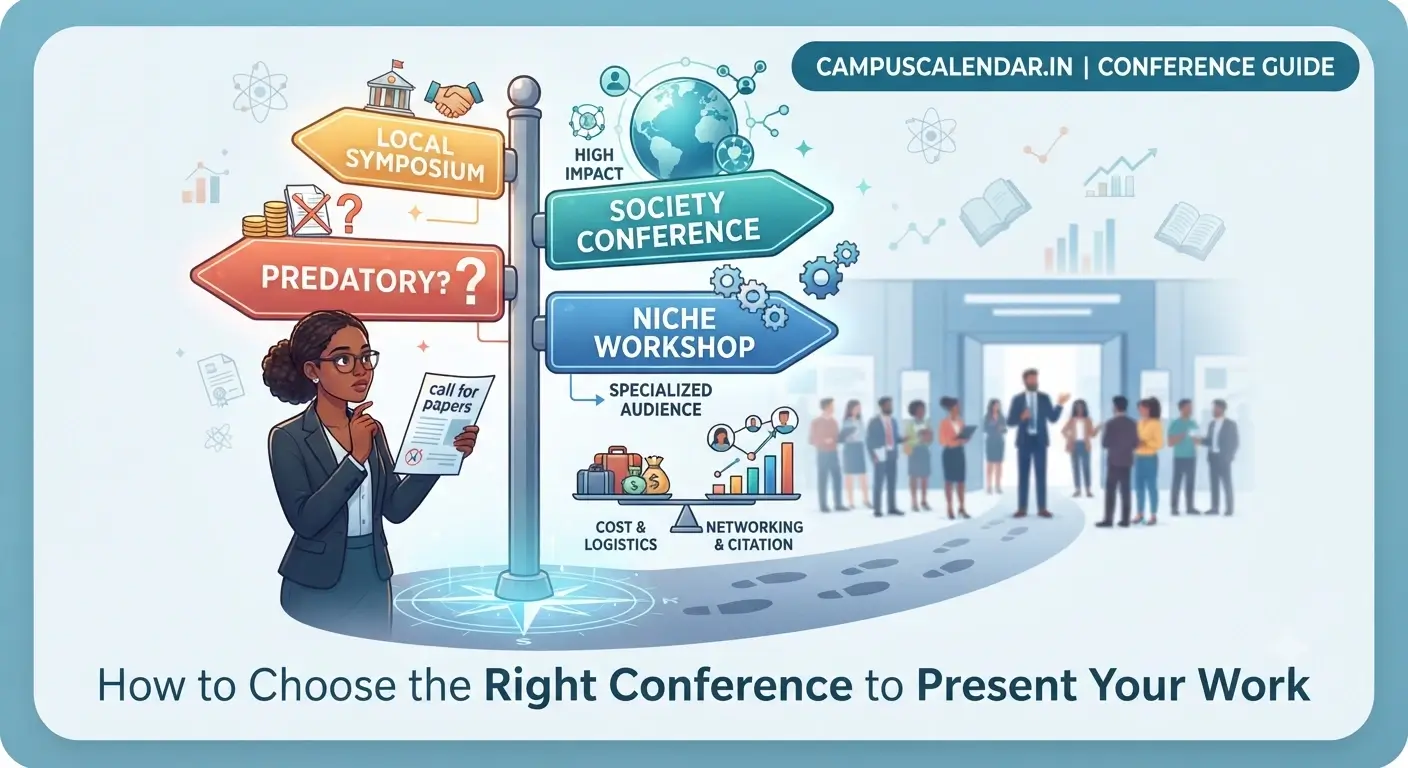
- Feedback & Refinement: If your project is still in progress, look for regional or specialized workshops where you can share preliminary data in a supportive environment.
- Networking & Collaboration: If you are seeking future post-doc advisors, industry partners, or co-authors, choose large international society conferences where leaders in your specific subfield gather.
- Resume & Tenure Building: If your goal is to boost your CV or fulfill institutional funding requirements, prioritize highly competitive, peer-reviewed global congresses with high visibility.
2. Scope Alignment: Does Your Topic Fit the Community?
The golden rule of conference selection is relevance. Always look at the historical themes, previous program booklets, and keynote speakers from past iterations of the event. If your paper covers machine learning applications in agriculture, presenting it at a broad computer science symposium might give you scale, but presenting it at a dedicated agricultural technology convention will put you directly in front of the exact experts who can appreciate and cite your work.
3. Assessing Credibility and Avoiding Predatory Events
Unfortunately, the rise of open-call academic events has introduced predatory conferences—events that exist primarily to collect registration fees without offering rigorous peer review or legitimate academic networking.
Before submitting an abstract, screen potential conferences against these indicators:
❌ Red Flags: Predatory Conferences
Signs: Massive spam emails praising your abstract before seeing it; an editorial board or committee with fake or unverified credentials; vague scopes covering dozens of unrelated disciplines; lack of clear peer-review timelines.
Outcome: Wasted money and zero academic credibility.
✔️ Green Flags: Reputable Conferences
Signs: Backed by recognized professional societies (e.g., IEEE, ACM, Springer tracks); clear, transparent review committees with active university professors; structured submission guidelines; indexed proceedings.
Outcome: High-impact feedback, meaningful networking, and valuable CV weight.
4. Evaluating Logistics, Costs, and Accessibility
An elite conference loses its practical value if the financial and logistical hurdles outweigh the benefits. Keep a close eye on practical parameters:
- Financial Constraints: Calculate total expenses, including registration fees, travel, accommodation, and membership dues. Check whether the conference offers student travel grants, early-bird discounts, or virtual participation options.
- Geographic Location & Visas: For international events, factor in visa processing times and travel restrictions well in advance to avoid last-minute cancellations.
- Publication Outcomes: Does the conference publish full papers in Scopus-indexed proceedings or specialized journals? If publication tracking is a priority for your career progress, verify this before you submit.
Pro Tip: Utilize reliable institutional repositories and academic calendars to cross-check upcoming deadlines, CFP (Call for Papers) alerts, and verified event listings before committing your resources.
Conclusion
Choosing the right conference is a strategic decision that requires balancing your immediate research goals, quality filters, and available budget. By carefully researching event scopes, vetting organizing committees, and aligning your abstract with the right audience, you turn every conference presentation into a powerful stepping stone for your academic career.